Prince Gong's Mansion Museum, Ministry of Culture and Tourism

⭐ 5.00

No. 14A Liuyin Street, Xicheng District, Beijing, Prince Gong's Mansion Museum, Ministry of Culture and Tourism
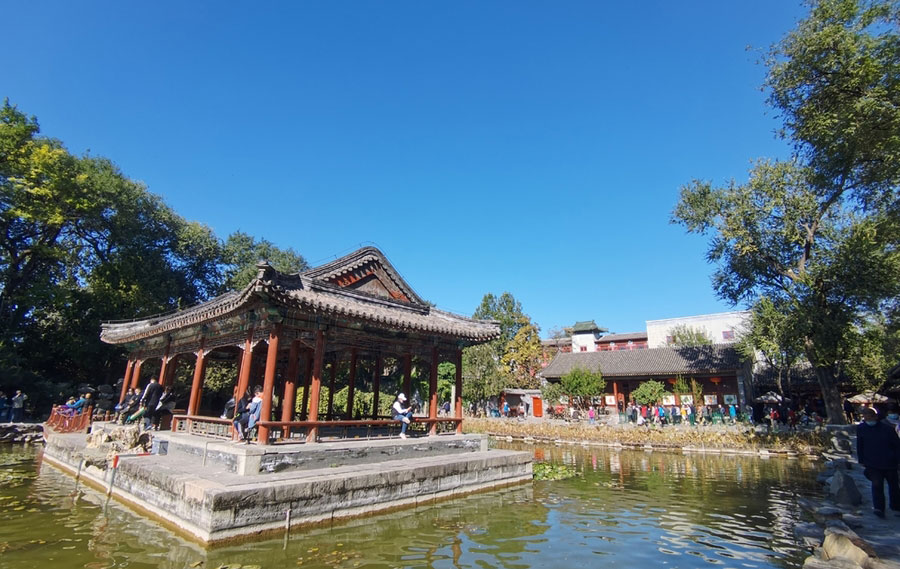
Prince Gong's Mansion Museum, Ministry of Culture and Tourism
Prince Gong's Mansion witnessed the Qing dynasty's rise and decline, having successively belonged to powerful official Heshen, Prince Qingxi Yonglin, and Prince Gong Yixin. Prince Gong resided here for nearly forty years, presiding over the Self-Strengthening Movement and participating in many major historical events. The layout and furnishings of the mansion reflect the political life of Qing dynasty princely residences and serve as a physical testament to interpreting Qing history. The residence is laid out along a central axis, with the Yinan Hall at the center, where green glazed tiles signify the rank of a prince. The Xijinzhai Hall is finished in golden Phoebe nanmu wood and modeled after the form of the Ningshou Palace in the Forbidden City, representing the pinnacle of luxury. The rear screen building stretches over a hundred meters in length, with its tiered halls running in succession, earning the reputation of the "99 and a half rooms." The Cuijin Garden in the garden is a fusion of Chinese and Western styles, with the Western-style gate carved in white marble and inspired by the lost glories of the Old Summer Palace. The Grand Theater within the mansion is the only fully enclosed Qing dynasty princely theater still in existence in China, constructed entirely with wooden mortise-and-tenon joints without a single iron nail. Its domed ceiling features exquisite painted designs and superb acoustics. Within the Miyun Cave of the garden stands the stele bearing Kangxi's imperial brush inscription of the character "Fu" (Fortune), bold and powerful, celebrated as the "Best Fortune Under Heaven," drawing visitors to view it and seek blessings. The scenic area is open from 8:30 to 17:00, with last entry at 16:10. It is closed every Monday (except statutory holidays). Adult tickets are 40 yuan; seniors over 60 and full-time students pay half price; children under 6 are admitted free of charge. Reservations must be made through the official WeChat public account using real-name registration, as no on-site ticket windows are available. It is recommended to take Subway Line 6 to Beihai North Station, Exit B, and walk for about 8 minutes to arrive. Parking in the surrounding hutong alleys is limited, so driving is not advisable. A full tour takes approximately 2.5 to 3 hours, and audio guides can be rented for a deeper understanding of the historical stories. After the visit, visitors can take a leisurely stroll along Shichahai Lake and Yandai Xiejie (Pipe Alley) to experience the charm of old Beijing's hutong neighborhoods.

Traveler reviews

Prince Gong's Mansion is the largest and best-preserved princely residence of the Qing Dynasty. It's a national AAAAA-rated scenic spot and a first-class museum. As the renowned scholar Mr. Hou Renzhi put it, "One Prince Gong's Mansion tells half the history of the Qing Dynasty." The historical weight here is remarkable — it's a living fossil of Qing-era architecture, bearing witness to the dynasty's rise and fall. In terms of the buildings themselves, nothing else comes close: the largest scale, t...
⭐ 5 · Taylor Reid Expand
This is the best-preserved princely mansion in Beijing. It was originally the residence of Heshen, and after Emperor Jiaqing confiscated his estate, it was granted to Prince Qing Yonglin. Later, Emperor Xianfeng gave it to Prince Gong Yixin, which is how it got the name Prince Gong's Mansion. I specifically booked a guided tour in advance, and it definitely didn't disappoint. The guide explained things in a way that was both deep and accessible—not only walking us through the mansion's transformation from Heshen's home to Prince Gong's residence, but also giving detailed insights ...
⭐ 4 · Charlie Brooks Expand