Ming Tombs, Changping District, Beijing

⭐ 5.00

Ming Tombs Scenic Area, Changping District, Beijing
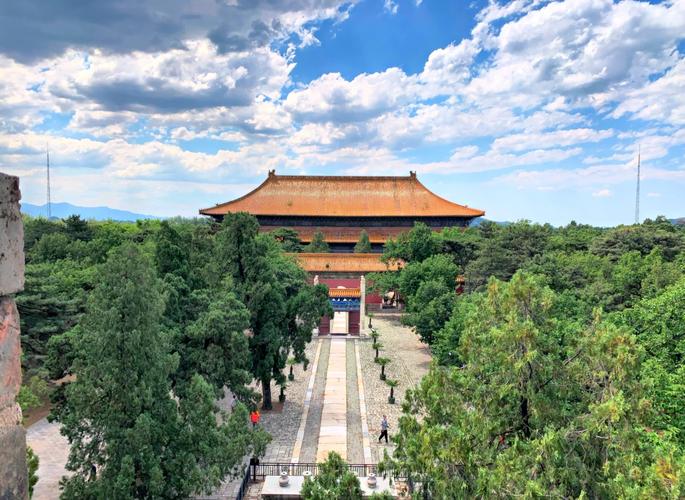
Ming Tombs, Changping District, Beijing
The Ming Tombs were first constructed in the seventh year of the Yongle reign of the Ming Dynasty (1409) and took more than two hundred years to complete. The complex encompasses thirteen imperial mausoleums, consort burial grounds, the Spirit Way, and ancillary structures, covering a total area of over forty square kilometers. With Tianshou Mountain at its back and Mang Mountain and Tiger Mountain standing guard in front, the layout strictly adheres to the ancient Chinese feng shui theory of "dragon, cave, sand, and water." It is the largest and best-preserved group of imperial mausoleums in existence, inscribed on the World Heritage List in 2003. The Spirit Way (Main Spirit Way) serves as the central axis of the tomb complex, stretching 7.3 kilometers in total. The stone memorial archway at its starting point is the largest extant white marble archway, and along the route are distributed the Great Stone Bridge, the Stele Pavilion, and eighteen pairs of stone figures, including lions, elephants, qilin, fine horses, and civil and military officials. With their solid, dignified forms and imposing grandeur, they form the most ceremonial prelude to the tomb area. Chang Ling is the mausoleum of the Yongle Emperor Zhu Di and boasts the best-preserved architecture. Its Ling'en Hall has a width of nine bays and houses thirty-two columns carved from whole pieces of golden Phoebe zhennan, each over one meter in diameter and more than ten meters tall—a rarity unmatched anywhere in the world. Within the hall, one can appreciate the ultimate grandeur of Ming Dynasty imperial architecture; the wood grain and fragrance remain clearly discernible even after six centuries, making it the undisputed pinnacle of architectural art in the tomb complex. Ding Ling is the mausoleum of the Wanli Emperor (Emperor Shenzong of the Ming Dynasty) and is currently the only imperial underground palace that has been archaeologically excavated and opened to the public. The underground palace consists of five stone chambers, from which over three thousand precious artifacts have been unearthed, including the golden wing-tipped ceremonial crown and the twelve-dragon-nine-phoenix crown. The underground palace maintains a constant, cool temperature; stepping inside feels like traveling through time to face the secret history of the Ming court directly, making it the core attraction with the strongest historical impact in the entire scenic area. Zhao Ling has been comprehensively restored and reconstructed, with its above-ground structures fully intact, making it an ideal model for gaining an intuitive understanding of Ming Dynasty mausoleum regulations. Compared with the more popular attractions, it offers a quieter and more serene atmosphere. Visitors are advised to purchase the "Three Tombs and One Way" combo ticket in advance and tour in the order of "Spirit Way → Ding Ling → Chang Ling," allowing approximately four to five hours for the highlights. Photography is prohibited inside the underground palace—please respect the solemn atmosphere. Sun protection is essential in summer, and an extra jacket is advisable in winter.

Traveler reviews

Strolled through Chang Ling at the Ming Tombs — what an awe-inspiring site with so much ancient atmosphere. The Ling'en Hall's massive golden nanmu wood columns still stand tall and remarkably intact after 600 years of weathering. Red walls, dark tiles, stele pavilions, and ancient cypresses all showcase the solemn grandeur of Ming dynasty imperial...
⭐ 5 · Quinn Lee Expand
The Ming Tombs are the burial complex of the Ming Dynasty emperors, located at the foot of Tianshou Mountain in Changping District, about 50 km outside of Beijing. The complex includes the tombs of twelve of the thirteen Ming emperors (excluding Emperor Jingtian, Zhu Qiyu), along with their empresses and concubines. Construction began with the Chang Ling tomb of Emperor Chengzu (Zhu Di) and ended with the Si Ling tomb of Emperor Sizong (Zhu Youjian). Each tomb has its own distinctive architectural style and layout, though all follow the standard Ming imperial tomb design, featuring sacred paths, spirit ways with stone statues, bright towers, and treasure cities. In 1987, the Ming Tombs were inscribed as a UNESCO World Heritage Site. In 2003,...
⭐ 5 · Jamie Cole Expand